
In this article
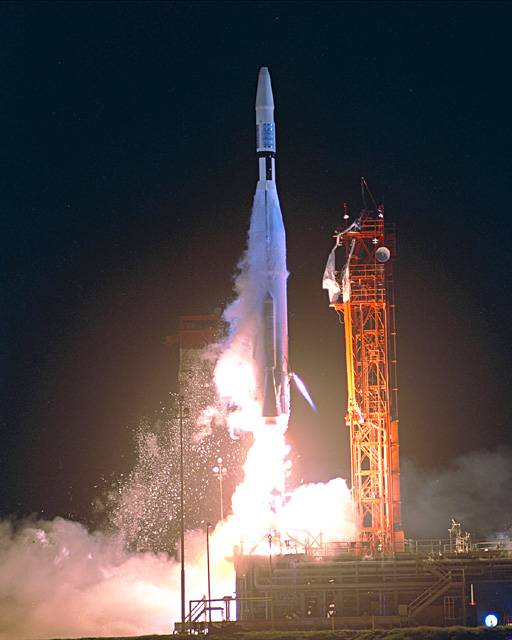
Before dawn on 22 July 1962 at Cape Canaveral, Florida, America’s first Venus probe, Mariner 1, rose on an Atlas-Agena rocket. Within minutes the rocket began to wobble and stray off course. At 293 seconds into the flight, a range safety officer pressed a button and the rocket was blown apart over the Atlantic. Investigators later found that one cause was a tiny bar missing above a symbol in a hand-written guidance equation.
The race to Venus
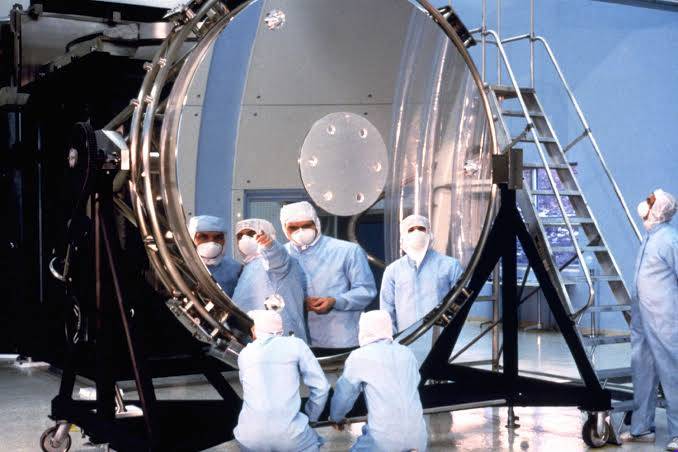
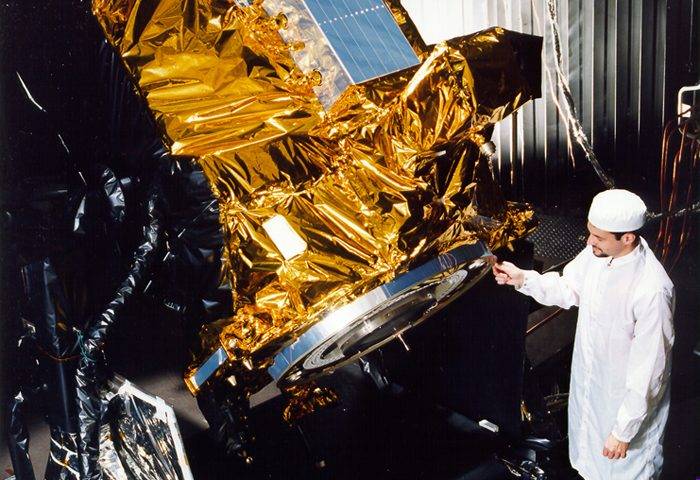
In the early 1960s the US and the Soviet Union were competing hard in space, and being first to send back data from another planet was a big prize. NASA’s JPL built two identical spacecraft, Mariner 1 and Mariner 2, based on the Ranger Moon probes.
- Mariner 1 weighed about 202.8 kg.
- It carried instruments for seven experiments, including a magnetometer and microwave and infrared radiometers.
- The launch window ran from 18 July to 12 September 1962, with a Venus flyby planned for December.
It lifted off from Launch Complex 12 at 09:21:23 UTC on 22 July 1962.
How the rocket was steered
There was no powerful onboard computer. The Atlas was guided from the ground: radar measured its position and speed, a ground computer did the maths, and steering commands went back by radio. An antenna and beacon on the rocket kept the radar link.
Radar data is always a little jittery, so before going into the guidance equations it had to be smoothed, that is, averaged over a short time. In mathematics a bar over a symbol (an overbar) means exactly that: use the averaged value.
Think of cricket: selectors judge a batter by their batting average, not by a single ball. Changing your mind after every delivery would cause chaos. The guidance computer needed that “average”.
What went wrong
NASA’s historical accounts describe two problems combining:
- Hardware: an antenna on the Atlas lost its lock with the ground, a known problem that usually fixed itself.
- Software: one equation in the guidance program was missing the overbar on the symbol R. It is usually said the bar was lost when the hand-written formula was turned into computer code.
On a normal flight the software error did nothing. But when the antenna problem made the data unsteady, unsmoothed, noisy values went straight into the guidance computer. It treated the jitter as real motion, sent commands to correct an error that did not exist, and the rocket obeyed them, veering off course.
Imagine a driver told to turn the wheel for every pebble on the road: the car would swing left and right instead of going straight. Without the overbar, the guidance computer did just that. With the bar in place, the jitter would have been averaged out and the rocket kept steady.
The range safety button
Every launch from Cape Canaveral is watched by a range safety officer, whose job is to destroy a rocket that strays from its safe path before it can fall on shipping lanes or towns.
At 293 seconds (some NASA pages say 294.5 seconds), about six seconds before the Agena and spacecraft were due to separate from the Atlas, the officer sent the destruct command. After separation there would be no way to control it, so this was the last chance. The debris fell into an empty part of the Atlantic, and a NASA history article notes the spacecraft kept transmitting for more than a minute as it fell.
“The most expensive hyphen in history”
A few days later the New York Times ran a headline blaming the loss of the Venus rocket on a missing hyphen. Arthur C. Clarke, the famous science-fiction writer who lived in Sri Lanka, called it “the most expensive hyphen in history”, a line most sources place in his 1968 book The Promise of Space. The phrase stuck.
In fact it was not a hyphen. NASA has since explained it was an overbar over R; a horizontal stroke simply became a “hyphen” in the newspapers. The cost is often given as about $18.5 million at the time, though sources differ.
Five weeks later
JPL had no time to mourn. Both faults were fixed before the window closed, and Mariner 2 launched on 27 August 1962. On 14 December 1962 it flew past Venus, the first spacecraft to return data from another planet. Read that story in our Mariner 2 article.
A lesson that still holds
Mariner 1 is still taught to software engineers. A single small symbol matters. More importantly, a bug that never causes trouble on its own can become deadly when it meets a different fault. Testing must cover not only normal conditions but also what happens when things go wrong. For more errors from NASA’s history, see our article on NASA’s mistakes.
Sources
- NASA History: 60 Years Ago, Mariner 1 Launch Attempt to Venus
- NASA Science: Mariner 1 mission page
- Fast Company: The most expensive hyphen in history
- Gizmodo: The Typo That Destroyed a NASA Rocket
- Mental Floss: On this day in 1962, NASA launched and destroyed Mariner 1
Spotted a mistake in this article?