
In this article
NASA always has big plans, but the dates move. Articles written in 2024 confidently said astronauts would be back on the Moon’s surface by 2026. That did not happen. So where do NASA’s major upcoming missions actually stand in October 2026?
We cover Mars separately in Future Mars Missions, so this article focuses on the Moon, Jupiter, Saturn and NASA’s space telescopes.
Artemis: back to the Moon
Artemis II: done
On 1 April 2026, Reid Wiseman, Victor Glover, Christina Koch and Canada’s Jeremy Hansen rode the SLS rocket and Orion spacecraft around the Moon, splashing down in the Pacific nine days later. At their farthest they were 406,771 km from Earth, breaking the distance record Apollo 13 had held since 1970. It was the first time humans had been to the Moon’s vicinity since 1972.
Artemis III: a changed mission
Artemis III was supposed to be the landing. On 27 February 2026 NASA changed that: the mission will now stay in low Earth orbit, around 430 km up, where Orion will rendezvous and dock with test vehicles of SpaceX’s Starship and Blue Origin’s Blue Moon landers and the crew will test the new AxEMU spacesuit.
The crew, named in June 2026, is Randy Bresnik, Frank Rubio, Andre Douglas and ESA’s Luca Parmitano. On 13 October 2026 NASA reported that booster stacking for Artemis III was complete. Launch is targeted for 2027.
Artemis IV, V and a Moon base
- Artemis IV (early 2028) is now expected to be the first crewed landing since Apollo 17, putting two astronauts near the lunar south pole. Which lander is used will depend on Artemis III results.
- Artemis V (late 2028) would be the second landing, with roughly yearly landings planned after that.
- Gateway paused: on 24 March 2026, NASA Administrator Jared Isaacman announced that the lunar-orbiting Gateway station was being paused “in its current form” in favour of building a permanent base on the lunar surface.
NASA also cancelled the upgraded SLS Block 1B and Block 2 versions in February 2026, standardising on the existing Block 1 rocket.
Europa Clipper: Jupiter’s ocean moon
Launched on a Falcon Heavy on 14 October 2024, Europa Clipper is the largest spacecraft NASA has built for a planetary mission. It swung past Mars on 1 March 2025, and its next milestone is an Earth flyby on 3 December 2026, which sends it on to Jupiter orbit in April 2030.
From there it will make 49 close passes of Europa, some as low as 25 km above the ice. Beneath that ice shell is thought to be a salty ocean, and the mission’s job is to find out whether it has conditions suitable for life. (Read our Europa article.)
Dragonfly: a drone for Titan
Saturn’s largest moon, Titan, has a thick atmosphere, which makes flying easier than driving. Dragonfly is a nuclear-powered (MMRTG) rotorcraft with eight rotors.
- Launch: July 2028 on a Falcon Heavy
- Arrival at Titan: 2034
- Landing area: dune fields near Selk crater
- Spacecraft assembly began in March 2026
Dragonfly will look at how far Titan’s mix of water and organic chemistry has gone along the steps that, on Earth, came before life.
Space telescopes
Nancy Grace Roman Space Telescope
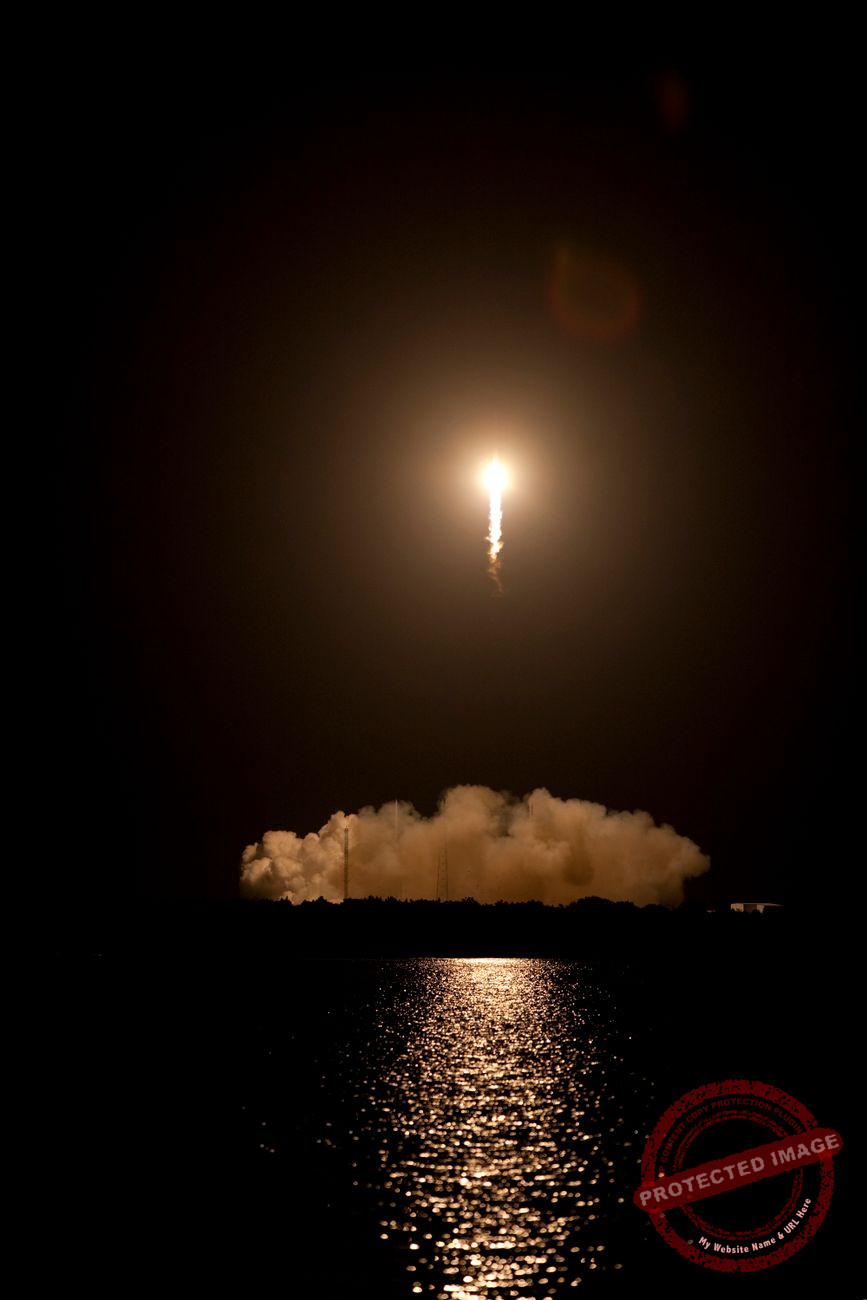
Roman launched successfully on a Falcon Heavy on 30 August 2026 and is heading for an orbit around the L2 point, about 1.5 million km from Earth. Its field of view is far wider than Hubble’s, and its five-year primary mission will map dark energy and dark matter and find thousands of exoplanets.
Meanwhile James Webb and Hubble are both still at work.
NEO Surveyor: the asteroid hunter
NEO Surveyor is an infrared telescope built specifically to find asteroids that could threaten Earth. Launch is planned for September 2027, and the goal is to find two-thirds of near-Earth asteroids larger than 140 m within its first five years.
Other spacecraft on the way
- Psyche is cruising to the metal-rich asteroid 16 Psyche, arriving in 2029.
- ESCAPADE, twin Mars orbiters, arrive in September 2027.
- Mars Telecommunications Orbiter: contract awarded to Blue Origin in September 2026.
The budget: the biggest unknown
Money, more than technology, decides NASA’s future. For fiscal year 2026 the White House proposed cutting NASA to US$18.8 billion, but Congress rejected that and provided US$24.44 billion, with US$7.25 billion for science. The same bill cancelled Mars Sample Return.
The FY2027 request is again US$18.8 billion. It gives Exploration, which includes Artemis, US$8.5 billion but drops science to about US$3.9 billion, a 46% cut, and would eliminate the VERITAS and DAVINCI Venus missions and end Mars Odyssey. A stopgap continuing resolution signed on 2 September 2026 keeps NASA at its FY2026 level of about US$24.4 billion until 11 December 2026, but no full-year FY2027 budget has been passed. Until Congress makes its final decision, those missions remain in doubt.
At a glance
| Mission | Destination | Status (Oct 2026) |
|---|---|---|
| Artemis II | Around the Moon (crewed) | Completed April 2026 |
| Artemis III | Earth orbit (crewed) | Targeted 2027 |
| Artemis IV | Lunar landing | Targeted early 2028 |
| Europa Clipper | Jupiter / Europa | Cruising; Earth flyby 3 Dec 2026; arrival April 2030 |
| Dragonfly | Titan | In assembly; launch July 2028 |
| Roman | L2 (telescope) | Launched 30 Aug 2026 |
| NEO Surveyor | L1 (telescope) | Launch Sept 2027 |
In short, NASA has put the Moon first and is fighting a budget battle over its science missions. Even so, the next few years should bring new footprints on the Moon and fresh results from worlds like Europa and Titan. (See also our earlier article on future space projects.)
Sources
- Wikipedia – Artemis program
- Wikipedia – Artemis III
- NASA – NASA completes Artemis III booster stacking, shares status update (13 Oct 2026)
- The Register – NASA pauses Lunar Gateway for Moon base (Mar 2026)
- Wikipedia – Europa Clipper
- Wikipedia – Dragonfly (Titan space probe)
- NASASpaceFlight – NASA, SpaceX launch the Nancy Grace Roman Space Telescope (Aug 2026)
- The Planetary Society – Analyzing the FY2027 NASA budget request
- SpacePolicyOnline – House Clears FY2027 CR, Now to the President (Sept 2026)