In this article
On 29 May 2014, a small team in the control room of the Arecibo radio telescope in Puerto Rico held its breath. They had just sent a command to a 36-year-old NASA spacecraft that NASA had stopped operating about 17 years earlier. They had no big institution behind them, only money donated online by ordinary people around the world and a lot of determination. Moments later, the old spacecraft answered.
A spacecraft sent to measure the Sun’s wind
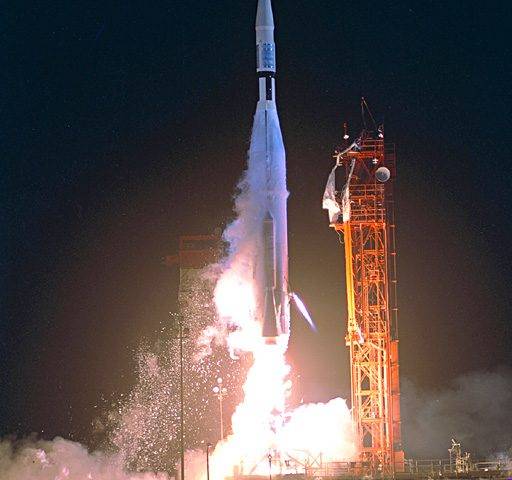
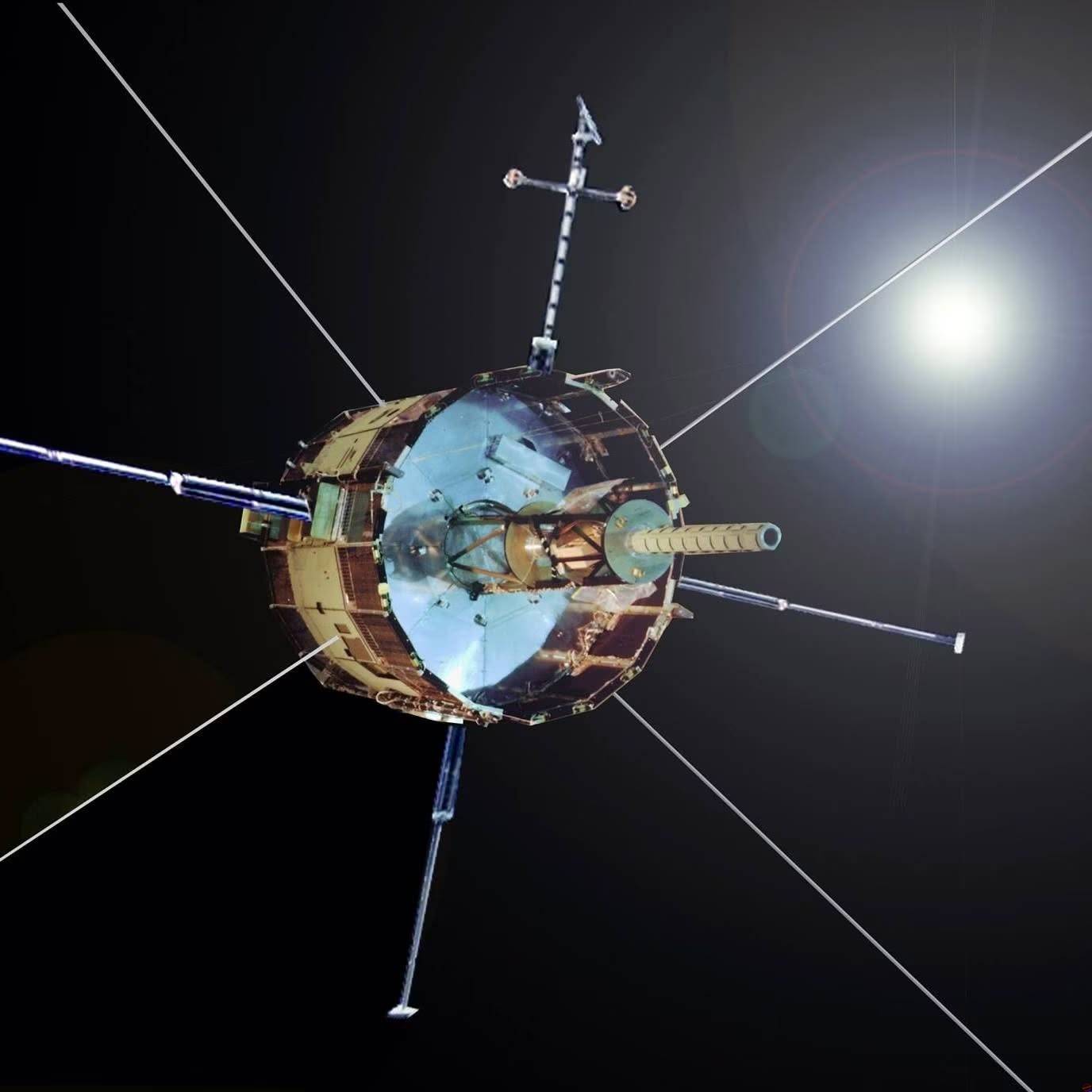
ISEE-3, the International Sun-Earth Explorer 3, launched from Cape Canaveral on a Delta rocket on 12 August 1978. Its job was to measure the solar wind, the stream of charged particles flowing from the Sun, before it reached Earth.
To do that it went to L1, a point about 1.5 million km from Earth towards the Sun, where the gravity of the Sun and Earth balance so that a spacecraft can loop around it in a halo orbit. ISEE-3 entered that orbit on 20 November 1978. On 10 June 1982 it moved into Earth’s magnetotail and surveyed that region too.
A new name and a comet
In 1982 NASA scientist Robert Farquhar and colleagues came up with a bold plan: pull ISEE-3 away from L1, swing it past the Moon five times, and use lunar gravity to fling it towards a comet. The last lunar flyby came on 22 December 1983, and the spacecraft was renamed the International Cometary Explorer, or ICE.
On 11 September 1985, ICE passed about 7,862 km from the nucleus of comet 21P/Giacobini-Zinner, the first time any spacecraft had flown past a comet. On 28 March 1986, from about 40 million km away, it also measured the solar wind heading towards Halley’s Comet.
“There is no equipment to talk to it”
Daily data return stopped in December 1995, and NASA formally ended the ICE mission on 5 May 1997. But the transmitter was left on, so for years the spacecraft circled the Sun sending out a plain carrier signal.
Its orbit was known to bring it back near Earth in 2014. If its engines could be fired then, it might be steered back towards L1 and put to work again. The problem was that the old ground equipment used to command it was no longer in service, and NASA initially said rebuilding it would cost too much.
Mission control in an old McDonald’s
Enter Keith Cowing, editor of NASAWatch, and Dennis Wingo, CEO of a company called Skycorp. They launched the ISEE-3 Reboot Project and began raising money on the crowdfunding site RocketHub. Thousands of people worldwide chipped in, and the total reached close to $160,000. Getting a NASA mission to launch can easily cost more than $100 million, so this was a tiny sum.
The team worked from a disused McDonald’s restaurant on the grounds of NASA Ames Research Center in California, nicknamed “McMoons”, where an earlier project had recovered old Lunar Orbiter photographs.
After some negotiation, NASA signed an agreement with the team on 21 May 2014, allowing the private group to try to contact and control the spacecraft.
Rebuilding an old radio in software
With the original hardware gone, the team turned to software-defined radio (SDR), where most of the work of generating and decoding a radio signal is done by computer software. Balint Seeber of Ettus Research led this effort using the open-source GNU Radio package. Cowing tracked down original engineers and old documents. Radio amateur Phil Karn helped decode the incoming signal, and the AMSAT-DL amateur radio group in Bochum, Germany, also took part. To pin down the spacecraft’s exact position, the team rented time on NASA’s Deep Space Network dishes.
Arecibo could track the spacecraft for only about 2 hours 45 minutes a day. Until 29 May the team had heard only the carrier signal. A command to transponder B got no reply. A command to transponder A, on 2.042 GHz, made the spacecraft start sending telemetry, data about its own health. By coincidence, a magnitude 5.8 earthquake shook Puerto Rico at the same time. By 5 June all 13 science instruments had power, though it was not yet clear that all of them still worked.
The engines fire, and then?
On 2 July 2014 the team fired ISEE-3’s thrusters for the first time since 2 February 1987. The spin rate rose from 19.16 to 19.76 revolutions per minute. After 27 years, the engines worked.
But on 8 July a longer burn meant to change the orbit failed. The most likely cause was that the nitrogen used to pressurise the hydrazine fuel tanks had run out. Whether it had leaked away or dissolved into the hydrazine could not be determined. Either way, the spacecraft could not be brought back towards L1.
A final run as citizen science
The team did not give up. On 10 August 2014 ISEE-3 passed about 15,600 km from the Moon. Skycorp, with help from Google Creative Lab, then announced a new plan: use the radio telescope at Morehead State University in Kentucky to keep collecting data from the working instruments and make it public, for researchers and anyone else.
But no signal was received after 16 September 2014. Arecibo, Morehead and Usuda in Japan all listened without success. The team assumed the spacecraft had gone into safe mode, but that was a guess, not a confirmed diagnosis.
What the story teaches
- You can talk to an old spacecraft again, but you need its old documents and the knowledge of the people who built it.
- Cheap technology such as software-defined radio can do work that once needed a major institution.
- Space exploration is not only for the space agencies of big countries.
ISEE-3 is still orbiting the Sun. According to NASA, it should return near Earth about 17 years after 2014. Whether anyone will point an antenna at it then, we do not know. But its story shows that a handful of determined people can give a forgotten spacecraft its voice back.
Sources
- NASA Science – ISEE-3/ICE mission page
- The Planetary Society – After decades of silence, a vintage spacecraft says hello to Earth (2014)
- Scientific American – 36-Year-Old NASA Probe's Engines Successfully Fired Up by Private Team (2014)
- ARRL – Radio amateurs are key players in effort to maneuver 36-year-old NASA spacecraft (2014)
- Universe Today – ISEE-3 Completes Lunar Flyby, Begins a Citizen Science Program (2014)
- NASA HEASARC – ISEE-3 mission summary
- NASAWatch – ISEE-3 Is In Safe Mode (25 Sep 2014)
Spotted a mistake in this article?